
7 Tips to Keep Fresh Flowers Fresh Longer | Floriwish Flower Care Guide
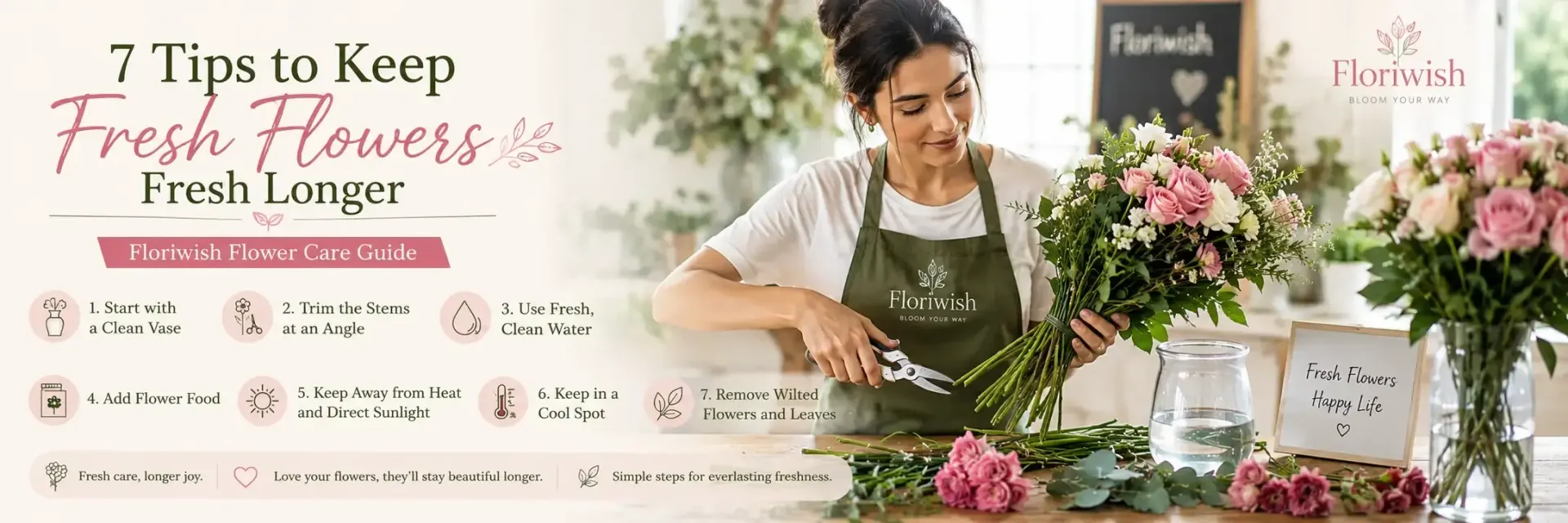
7 Tips to Keep Fresh Flowers Fresh Longer
A science-backed, easy-to-follow flower care guide because your bouquet deserves more than 3 days.
You finally received that gorgeous bouquet of roses, lilies, and maybe a few gerberas, and it looks absolutely stunning on your table. Then, two days later, the petals start drooping, the water turns cloudy, and by Day 4, you're throwing out what felt like a fleeting moment of joy.
Here's the truth: most flowers die early, not because of bad quality, but because of how we handle them after delivery. The right flower care routine can easily double the life of any bouquet from 4 days to 8, or even 10 days.
In this guide, Floriwish brings you 7 practical, science-backed tips to keep your fresh flowers looking vibrant, fragrant, and full of life. Whether it's a birthday bouquet, an anniversary arrangement, or a wedding decoration, these tips work for all fresh flowers, roses, carnations, orchids, lilies, and more.




Why Do Fresh Flowers Die So Fast?
Before we dive into the tips, it helps to understand the science. When a flower is cut from its plant, it loses its main water source. The stem then has to work harder to pull water up through tiny tubes called xylem vessels. Over time, two things block this process.
Bacteria multiply in the vase water, clogging the stem and preventing water uptake.
Air bubbles enter the cut stem, blocking the water channel.
Ethylene gas, produced naturally by the flowers and by nearby fruits, speeds up wilting flower delivery in india.
Every tip below targets one or more of these root causes. Once you understand the 'why,' the 'how' becomes obvious.



Trim the Stems at a 45-Degree Angle Always
The moment you receive your bouquet, re-trim the stems before placing them in water. Cut at least 1–2 cm from the bottom of each stem at a 45-degree angle rather than straight across. A diagonal cut creates a larger surface area for water absorption and prevents the stem from sitting flat at the bottom of the vase. Use sharp scissors or a floral knife dull blades crush the stem tissues, making it even harder for water to travel up.
Pro tip from florists
Trim your stems while holding them under running water or submerged in a bowl of water. This prevents air bubbles from entering the freshly cut stem, a trick professional florists use to dramatically extend bouquet life.
Remove All Leaves Below the Waterline
Any leaf or foliage that sits below the waterline in your vase will rot within a day or two, and rotting leaves are a bacterial goldmine. Before arranging your bouquet, strip away every leaf that will sit beneath the water surface. You don't need to remove all leaves, just those below the water level. The cleaner your water stays, the longer your flowers last.
Change the Vase Water Every 48 Hours
Bacterial growth in stagnant water is the fastest way to kill a bouquet. Change the water every 48 hours or at the latest every 72 hours. Every time you change the water, rinse the vase thoroughly with hot water and a drop of dish soap. And each time you refill, trim the stems again. This three-step refresh clean vase, fresh water, and re-trimmed stems is what keeps professional floral arrangements looking fresh for 10+ days.
Use Flower Food Or Make Your Own at Home
Flower food contains three things: sugar (carbohydrates to feed the flower), an acidifier like citric acid, which lowers water pH and helps it travel up the stem more efficiently, and a biocide (to kill bacteria in the water). If your bouquet didn't come with flower food, make this DIY version at home:
Keep Flowers Away from Heat, Direct Sunlight, and Fruit
Direct sunlight raises petal temperature and speeds up dehydration. But the sneaky culprit most people miss is fruit. Apples, bananas, and other ripening fruits naturally release ethylene gas, which accelerates wilting in nearby flowers. Keep your vase away from your fruit bowl, away from direct sunlight, and away from heat sources. The ideal spot is a cool, well-ventilated area of the room.
Refrigerate Your Flowers Overnight
This is the secret professional florists have used for decades. The cool temperature dramatically slows bacterial growth and reduces the rate at which the flower consumes its own energy reserves. Place your vase (or the bouquet loosely wrapped in a damp paper towel) inside your refrigerator overnight; just 6–8 hours can add 2–3 days to your bouquet's life.
Mist the Petals Don't Just Water the Stems
Fresh flowers absorb moisture not just through their stems but also through their petals. In dry indoor environments, especially in air-conditioned rooms during Indian summers, petals can dehydrate faster than the stem can compensate. A fine mist of cool, clean water sprayed lightly over the petals once a day makes a significant difference. Use a clean spray bottle and mist gently. For roses, lilies, and carnations, daily misting works beautifully.